New Outdoor Learning Space at Thorpe Primary Set to Transform Learning Provision
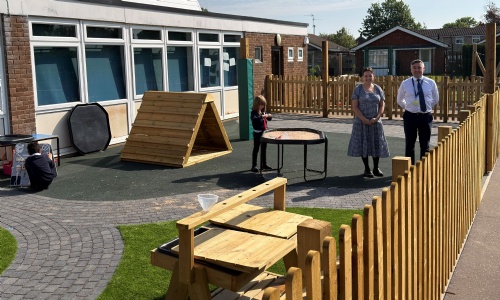
Thorpe Primary Academy is expanding its specialist provision for pupils with the development of a new outdoor learning environment, an extension of its established Potter Room. The initiative marks the next phase in the school’s commitment to inclusive, high-quality education for all pupils.
The Potter Room currently supports some Key Stage 1 and Key Stage 2 pupils through a tailored, multi-sensory approach to learning. Each morning, pupils focus on core subjects including reading, writing and maths, delivered through adapted teaching strategies.
They also take part in targeted interventions such as Attention Bucket, sensory story sessions and fine motor activities. Afternoons are dedicated to developing social communication and essential life skills.
The new outdoor space will act as an extension of this provision, creating a dedicated outdoor classroom where pupils can access the curriculum through practical, hands-on and sensory-based learning. The space will include features such as sand and water play areas, a climbing wall, and equipment designed to support both fine and gross motor development.
This academic year, the school has strengthened its support for all pupils by appointing an experienced SEN teacher and embedding a whole-school total communication approach. The outdoor learning space represents the next step, with the aim of ensuring that outdoor provision is as strong and impactful as the indoor environment.
Mr Jamie Parkhouse, Head Teacher of Thorpe Primary Academy said: “We are incredibly proud of the progress we’ve made in developing our provision. This outdoor learning space will provide a vital extension to our Potter Room, giving our pupils greater opportunities to learn, regulate and engage in a way that meets their individual needs.”
Pupils from Key Stage 1 and Key Stage 2 access the Potter Room at different points throughout the day, alongside their mainstream classroom learning, ensuring a fully inclusive and personalised approach.
Mr Parkhouse said: “The outdoor area will be a flexible, multi-purpose space used as an outdoor learning classroom delivering the curriculum in a multi-sensory way, a setting for gross motor and sensory interventions, a space to meet individual sensory needs, an environment for play, for social interaction and communication development and a safe space for pupils to regulate.”
The provision is designed to remove barriers to learning by enhancing engagement through hands-on experiences, supporting communication and social interaction in a less restrictive environment, promoting physical development, and meeting a wide range of sensory needs.
This new outdoor facility will play a key role in supporting some of the school’s most vulnerable learners, helping them to engage, develop and succeed in a setting designed around how they learn best.